Slow travel Algarve Portugal — five weeks based in Portimão without a rental car taught us more about southern Portugal than our previous two visits combined. We’ve been to Portugal three times now. The Algarve twice before that. And yet this trip — five weeks based in Portimão without a rental car — turned out to be the most genuinely relaxed we’ve felt in any destination we’ve visited as slow travelers.
The missing International Driving Permit was the accident that made it happen. We forgot to sort one before leaving Cape Town, which meant no car rental on arrival. What felt like a logistical headache in Lisbon turned into the best possible forcing function: we slowed down, leaned on trains and walking, and experienced the Algarve the way most visitors never do.
This is what five weeks of slow travel in southern Portugal actually looks like.
Where We Stayed
We booked an Airbnb just outside the Praia da Rocha area in Portimão and settled in for the long haul. Five weeks in one place changes how you relate to a destination — you stop treating it like a checklist and start treating it like somewhere you actually live, at least for a while.
April into early May is a genuinely good time to be here. Warm enough for beach walks and long outdoor dinners, but the summer crowds that turn the Algarve into something closer to a theme park hadn’t arrived yet. The beaches were calm. The restaurants had open tables. The pace felt right.
Our grocery routine split naturally between two stores. The Spar nearby handled the daily bits — bread, fruit, whatever we needed that morning. For the bigger weekly shop, we walked the 1.7km to Continente, which became one of our favourite parts of the rhythm. Cooking at home most evenings kept costs down significantly over five weeks, but the real benefit was something harder to quantify: returning to the same supermarket week after week makes a place feel less like a destination and more like somewhere you actually live.
We picked up more Portuguese in those aisles than anywhere else — product labels, shelf signs, the cashier’s prompts at checkout. Words stick differently when you’re using them every few days to figure out which one is the fabric softener. If you’re planning a longer stay in the Algarve, leaning into the supermarket rhythm is one of the simplest ways to make it feel real.
A Day in Lagos
We’ve been to Lagos before, which made revisiting it even better. You stop performing tourism and start just being somewhere you know.
We started the morning at Restaurante Munich for breakfast, then walked through the Old Town — still lively, still worth an afternoon, still holding its character despite growing in popularity. From there, the day turned into a long coastal walk that happened to take in some of the Algarve’s most spectacular scenery: the Passadiços da Ponta da Piedade, Praia dos Pinheiros, Praia do Camilo, and Praia Dona Ana.
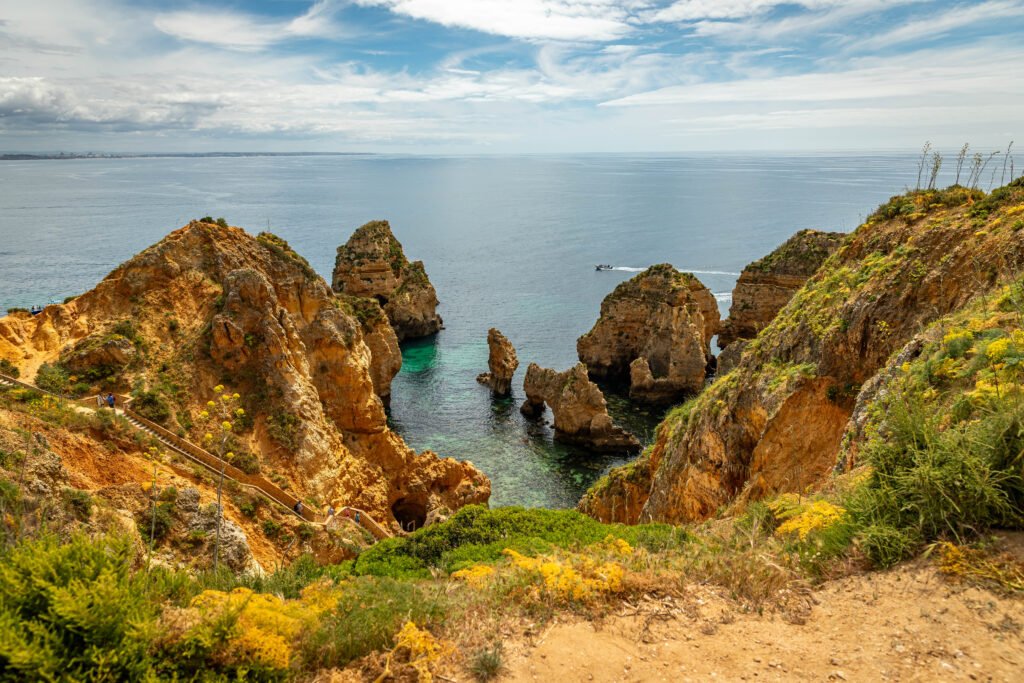
The shoulder season made a real difference here. These are beautiful spots, but in July they’re also crowded spots. In late April, we had them almost to ourselves.
We worked our way back toward the train station via Forte da Ponta da Bandeira — worth a photo even if you don’t go in — and caught the train back to Portimão. Which brings up one of the genuinely useful things we discovered on this trip.
Slow Travel Algarve Portugal: Getting Around Without a Car
We were skeptical about managing the Algarve without wheels. We shouldn’t have been.
The regional train between Lagos and Portimão costs around €2.20 one-way. Two euros and twenty cents. It runs regularly, it’s comfortable, and it connects the towns along the coast with very little fuss. For anyone visiting the Algarve who doesn’t want to deal with driving, parking, or navigating roundabouts at peak season, the train is a seriously underrated option.
For day-to-day movement around Portimão and Praia da Rocha, we walked almost everywhere. It’s that kind of place — compact enough to cover on foot, with enough along the way to make the walk worth it.
Eating in Portimão and Praia da Rocha
Staying five weeks in one place means you eat a lot of meals. Here’s the honest version of where we landed.
Allgarbe
This was our date-night choice, and it earned it. Allgarbe sits in Portimão’s historic centre — a small, intimate space with live jazz and a menu that takes Portuguese cooking seriously.
We had the fish soup and the tomato soup to start, then the chicken peri peri and the pork medalhões. Everything landed. The pork especially — properly cooked, not overcomplicated. Total for two with drinks came to around €75, which felt right for the quality and the atmosphere. We’d go back without hesitation.
Cantinho Português
Traditional Portuguese, and exactly what that should mean. The green cabbage soup — caldo verde — was better than we expected, and we’ve had versions of it all over the country. Simple, honest, the kind of thing that makes you understand why it exists. The peri peri chicken with sautéed garlic potatoes was the main event: well-seasoned, good heat, no fussiness.
The waiter made the whole evening. Warm, funny, clearly enjoying himself. That kind of service sticks with you.
Brasa na Praia
Peri peri chicken near the beach. Exactly what you want it to be — charred, well-spiced, good value. If you’re staying near Praia da Rocha, you’ll probably end up here more than once.
ASIA TOKYO RESTAURANT
Sometimes you just need a break from peri peri chicken. This was that break. A welcome change of pace mid-trip.
Ferragudo: A Town We Keep Coming Back To
We’d spent three weeks in Ferragudo on a previous trip. So when we went back this time, it wasn’t as visitors — it was as people returning somewhere familiar.
That changes how a place feels. We weren’t looking for what to do. We just spent a relaxed weekend day wandering, had brunch at Brunch in Rio, and let the town do what it does.
The area around Rua Dr. Luiz António dos Santos is one of the most photogenic streets we’ve come across in the Algarve — narrow cobblestones, whitewashed walls, cascades of pink flowers overhead.
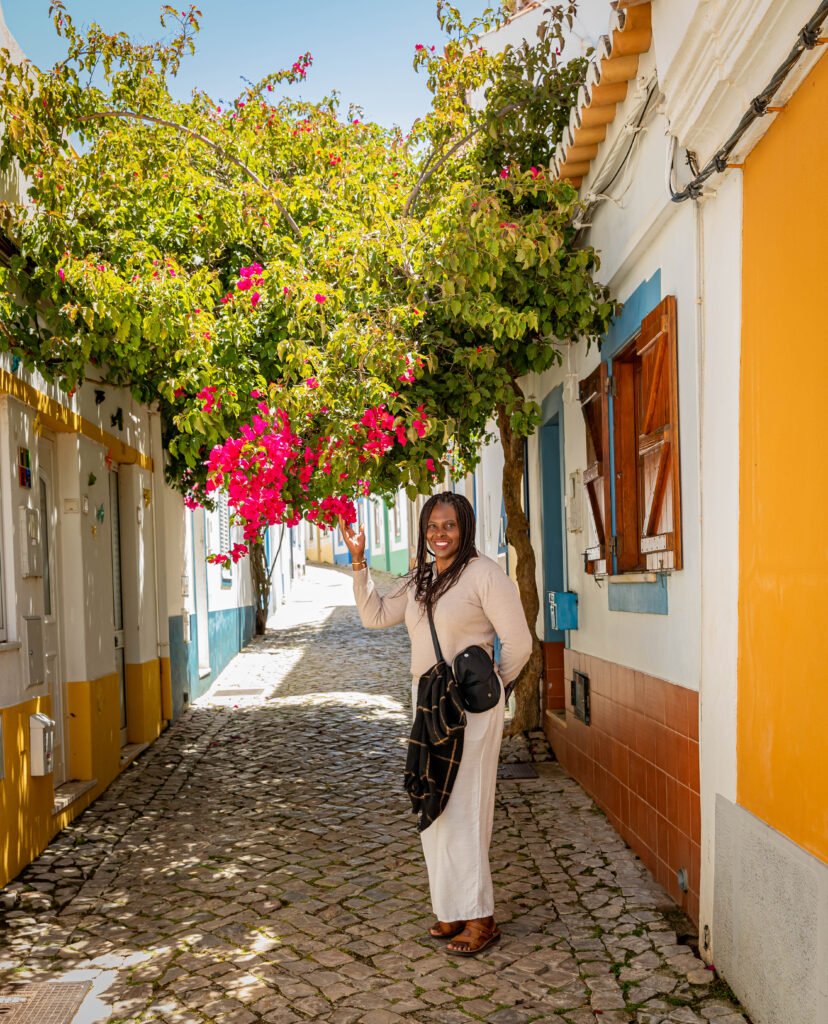
It photographs well, but it also just feels good to walk through. Down toward Praia da Angrinha, with the Forte de São João do Arade sitting across the water, the pace drops even further.
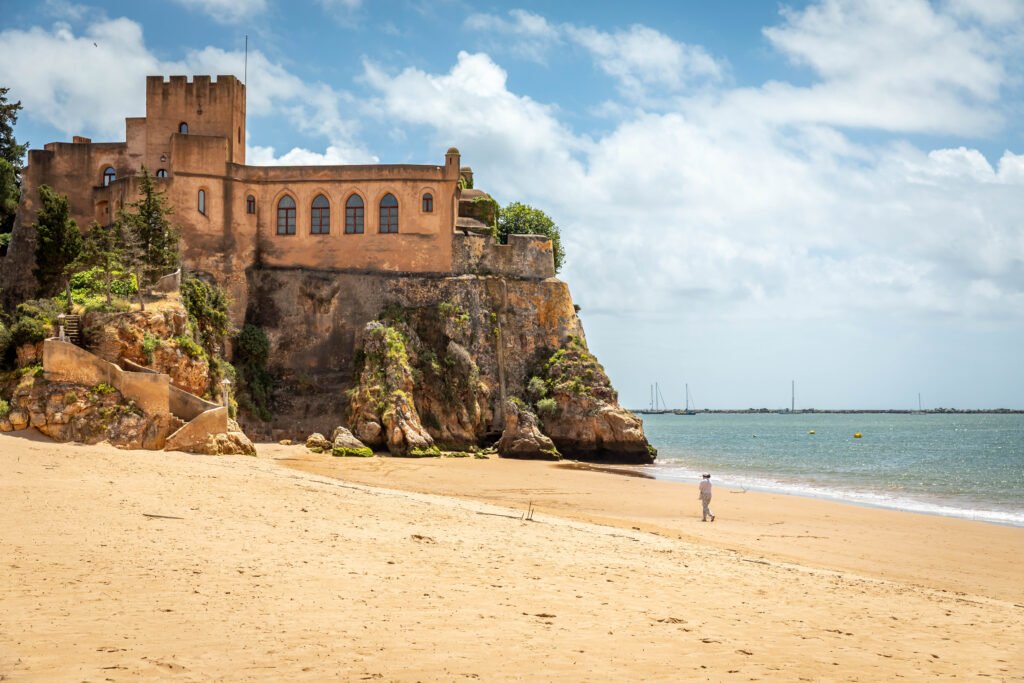
The fishing area at the end of the day — small boats, seafood restaurants, locals winding down — is the Algarve that most visitors don’t see because they’re too busy doing a full coastal circuit. We sat with it for a while. It was the right call.
Practical Tips for Slow Travel in the Algarve
- Best time to visit: April and early May is ideal — warm, sunny, and without the summer crowds. September is also strong.
- Getting around without a car: More doable than you’d think. The Lagos–Portimão train runs regularly and costs around €2.20 one-way. Within Portimão and Praia da Rocha, walking covers most of what you need.
- Base yourself in Portimão: Good access to beaches, trains, and the town itself. Less flashy than Lagos but more livable for a longer stay.
- Cash and card: Cards accepted widely at restaurants. Street vendors and markets often prefer cash — bring a mix.
- Heat: Comfortable in April/May. By June it climbs quickly. If you’re here in summer, plan coastal walks for early morning.
- Connectivity: Good mobile coverage throughout. If you’re arriving without a local SIM, an Airalo eSIM gets you connected before you land — grab one with $3 off using our referral.
- Day trips: Lagos is an easy 20-minute train ride from Portimão. Worth the trip even if you’ve been before.
- Tipping: Not obligatory but appreciated — rounding up or leaving a few euros is the norm at sit-down restaurants.
- Uber: Available throughout the Algarve and reliable. Good for late nights or any trip where the train doesn’t make sense.
Portugal rewards return visits. Every time we come back we find a slightly different rhythm — partly because we’re in a different place, partly because we’ve stopped needing to rush through it. Slow travel in the Algarve, Portugal turned out to be exactly what we needed after months on the road: five weeks without a car, based in one spot, cooking at home, eating in neighbourhood restaurants, taking the €2 train to Lagos. No itinerary. No checklist. Just a place, lived in properly.
Ferragudo still feels like the one that stays with us. Quieter than Lagos, less of a resort than Praia da Rocha, and exactly the kind of place you appreciate more on a return visit than a first one.
🎬 Watch the Full Video
We’re documenting our slow travel journey on YouTube — subscribe so you don’t miss the Algarve video when it drops
If you’ve spent time in the Algarve, or you’re planning a trip, drop us a comment below — we’d love to hear which town you ended up loving most.
— Mike & Marge | The Passport Pillow