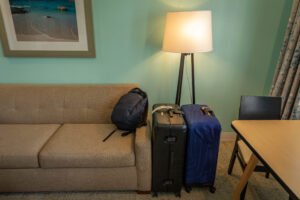
Slow travel London wasn’t something we planned as a concept — it was the practical choice that opened up an unexpectedly personal week. I was born in England, left decades ago, and hadn’t set foot back in London for roughly 35 years. Coming off months in Southeast Asia and Greece, I wasn’t sure what I’d find. A city I half-remembered. Accents that would feel both foreign and completely my own.
This is our honest account of a week in London earlier this month — staying outside the center, riding the Tube, eating fish and chips, and quietly rediscovering a city I thought I knew.
London Slow Travel in Walthamstow: Where We Stayed
Central London accommodation pricing has a way of resetting your expectations very quickly. After months of excellent value in Southeast Asia, the quotes we were seeing for a week in Westminster or Covent Garden felt genuinely jarring.
We found a highly rated Airbnb within walking distance of Blackhorse Road Station in Walthamstow — a residential neighborhood in northeast London that doesn’t feature in most travel guides, which is part of why it worked so well for us. No tourist bubble. Real corner shops, local cafés, neighbors who actually live there. After weeks in places that can sometimes feel curated for outsiders, there was something grounding about staying somewhere that was just… a neighborhood.
Blackhorse Road sits on the Victoria Line, which turned out to be a near-perfect base for the city. Direct to Oxford Circus in around 20 minutes. From there, the rest of London opens up.
If you’re visiting London for a week and your budget is a real consideration, this is the honest recommendation: look at Zone 3 on the Victoria, Jubilee, or Northern lines. You’ll save meaningfully on accommodation and spend the difference on things that are actually worth it.
Slow Travel London: Getting Around on the Tube
We’ve used a lot of public transport systems across a year of slow travel. London’s Underground is one of the best.
From Blackhorse Road, most trips into Central London took us around 50 minutes door-to-door — including the walk to the station and the walk at the other end. That sounds like a lot until you realize that in Central London you’d often spend 30 of those minutes just walking between where you’re staying and where you’re going anyway.
A few things that make the Tube easier if you haven’t used it recently:
- Use a contactless card — tap in, tap out, and it automatically caps your daily spend. No Oyster card required for most visitors.
- Download Google Maps before you leave. It gives you live departure times and walking directions from the exit — genuinely useful.
- The Victoria Line is fast. No complicated routing, minimal waits, direct connections to the major interchange stations.
- Ask station staff if you’re confused. They’re used to it and they’re helpful.
We used Uber exactly once. London traffic makes it expensive and slow. The Tube is almost always faster and significantly cheaper.
What We Did: A City That Takes Its Time to Reveal Itself
The Iconic Landmarks
Our first couple of days were clear and dry — London cooperating, briefly — and we used them well. Westminster, Big Ben, the Houses of Parliament, Buckingham Palace, the Horse Guards, Hyde Park, Tower Bridge, the Tower of London. We didn’t go inside most of them. At this point in our travels, we’ve found that walking past something extraordinary is often enough — more satisfying than queuing and paying for the interior version.
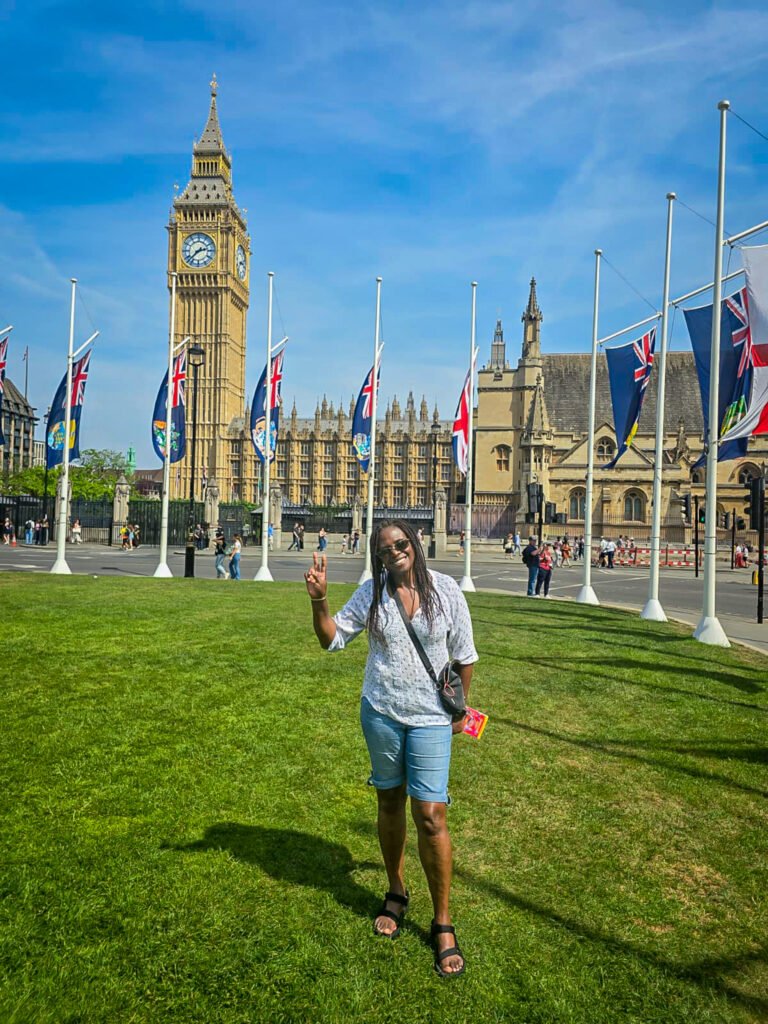
What struck me, coming back after 35 years, wasn’t how much had changed. It was how much hadn’t. The bones of the city — the skyline around the Thames, the width of the streets, the particular grey-gold light on a stone building in the afternoon — all of it was exactly as I’d stored it. The accents on the Tube. The way people move on escalators. It sounds like nothing, but it was unexpectedly moving to realize how much of it had stayed in me too.
The Hop-On Hop-Off Bus
We bought tickets for the City Sightseeing London Red Route, and if you haven’t visited London in a while — or ever — this is genuinely worth the money. Not as a tourist gimmick, but as a practical overview of a very large city.
London is hard to understand at street level until you’ve had a bird’s-eye orientation. The bus gave us that. We could see how the neighborhoods connect, where things are relative to each other, and which areas we wanted to come back to on foot. Used it on day one and it paid for itself in navigation time saved for the rest of the week.
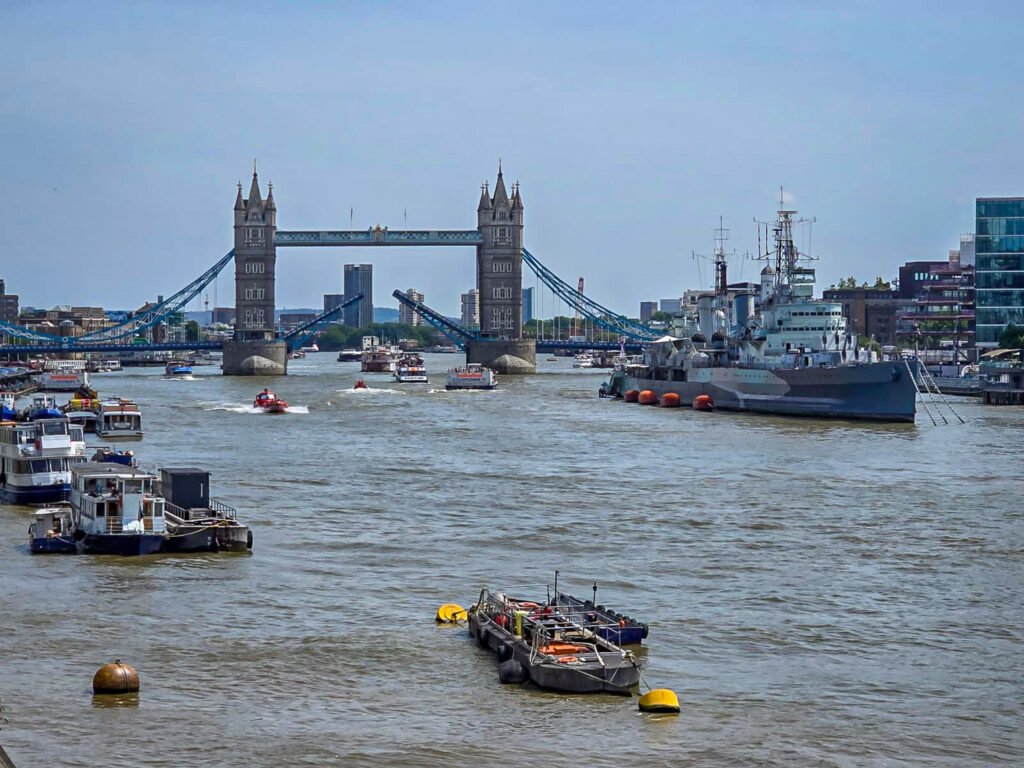
Traffic is always possible. We had no significant issues, but build in some flexibility if you’re trying to make it somewhere by a specific time.
Greenwich
If you’re spending a week in London, Greenwich deserves half a day. It sits outside the usual tourist circuit but tells a different and important part of the city’s story — maritime history, the Cutty Sark, the Royal Observatory, and a park that gives you one of the better views of the Canary Wharf skyline.
The atmosphere is noticeably calmer than Central London, the riverside walk is good, and it doesn’t feel like it’s trying to sell you anything. That’s increasingly rare.
Where We Ate
Because we were in an Airbnb, we mixed eating out with cooking at home — groceries from local Walthamstow shops, which were both good and significantly cheaper than eating every meal out in London. That balance matters over a week.
Sea Fryer Fish & Chip Shop
There was never a question of whether we’d eat fish and chips in England. Sea Fryer delivered exactly what it needed to — proper batter, good fish, the right amount of grease. Not a fancy experience. Just correct. Do it.
Saray Turkish & Mediterranean Restaurant, Herne Hill
This was the meal of the week. Marge and I both agreed without hesitation. The food at Saray was genuinely excellent — well-seasoned, generous portions, the kind of meal where you slow down halfway through because you don’t want it to end. Herne Hill is worth the trip on its own; Saray is the reason to make it a priority.
Chixee
A quick, convenient neighborhood option when we wanted something easy without Uber Eats. Solid for what it is — reliable local spot, nothing complicated.
We used Uber Eats a couple of evenings when we wanted a quiet night in. In London’s Zone 3, delivery selection is decent and costs less than eating out every single night.
Practical Tips for a Week in London
- Transport: Get a contactless card set up before you arrive. Tube and buses accept it everywhere — it’s the simplest option. Daily and weekly caps apply automatically.
- Connectivity: An Airalo eSIM is the cleanest way to handle data — get one before you land and skip the roaming charges entirely. Use our referral for $3 off.
- VPN: London has excellent public Wi-Fi across the Tube network and in most cafés, but on shared networks a VPN matters. We use NordVPN — set it up before you travel, not after.
- Tours & activities: We used Viator for planning options around London — good for day trips, Greenwich boat tours, and Thames experiences if you want something organized.
- Cash vs. card: London is largely contactless. You won’t need much cash — but keep a small amount for market stalls or the occasional cash-only spot.
- Weather: We visited in early June and had two good days before the rain moved in. Pack a light waterproof regardless — it’s non-negotiable in England, even in summer.
- Accommodation: Zone 3 on a fast line (Victoria, Jubilee, Northern) will save you real money. The commute is manageable and the neighborhood experience is often better.
- Cost reality: London is expensive. Budget roughly £15–25 per person for a sit-down meal, £3–5 for a coffee, and significantly more if you’re paying for attractions. Cooking some meals at your Airbnb makes a meaningful difference over a week.
Final Thought
What I didn’t expect about this week was how personal it would turn out to be. London as a tourist destination is well-documented — the landmarks, the museums, the cost. What you can’t read about is what it feels like to return to a place that formed you, after long enough away that you’ve become someone different. The city had changed. So had I. And there was something in that gap — hearing the accents, riding the Northern line, eating in a Turkish restaurant in Herne Hill on a Tuesday night — that felt like a quiet kind of reckoning.
We spent a week. It wasn’t enough. It was exactly enough.
For any slow traveler wondering whether London works outside the center — it does. Stay somewhere real, use the Tube, give yourself time to find the places the tourists aren’t. That’s where the city actually lives.
If you’ve done London outside the center, or you’re planning to, drop us a comment below — we’d love to know which neighborhood you landed in.
🎬 Watch the Full Video
We documented our week in London on our YouTube channel. Watch it here:
▶️ Returning to England After 40 Years to Find Out Who Was Still There
— Mike & Marge | The Passport Pillow
Slow travel for curious souls.