Peak District slow travel turned out to be one of the most unexpectedly moving experiences of our England trip — and I say that as someone who was actually born here. I grew up in Birmingham, just a couple of hours south, and somehow spent most of my childhood never making it to this part of the country. Rolling green hills and dry stone walls weren’t part of my upbringing. The Peak District, it turns out, was waiting.
Marge and I spent seven days based in the tiny village of Little Longstone, exploring the national park at our usual pace — unhurried, on foot when the roads allowed, and always with time to stop and look. This is what we found.
Where We Stayed: Little Longstone
After a few days in London — you can read about that leg of the trip in our Walthamstow post — we picked up a rental car in Birmingham and headed north into Derbyshire.
We’d chosen a one-bedroom Airbnb in Little Longstone, and it immediately justified the decision. The cottage was exactly what you want from an English country stay: stone walls, low ceilings, traditional touches throughout. At approximately $160 per night, it wasn’t cheap, but the location more than earned it. The same row of cottages also had two and three-bedroom options — useful to know if you’re travelling as a family or a small group.
Little Longstone itself is not a tourist village. It’s a real place — narrow streets, working farms, stone cottages that look like they’ve been there for centuries. At night the only sounds were birds and the distant hum of sheep. No traffic, no street noise. For slow travel Peak District style, it was close to ideal.
The nearest supermarket is an ALDI about ten minutes by car — easy enough for stocking up and cooking at home, which is what we did most evenings. There’s also The Packhorse, the local pub. We didn’t eat there ourselves, but every person we spoke to recommended it. Reservations are apparently wise — tables go quickly.
Peak District Slow Travel: What We Actually Did
Walking the Countryside
The honest answer is that we spent a lot of time doing very little by anyone else’s measure. We walked. Not structured hikes with elevation profiles and summit goals — just wandering. Out of the village, along the lanes, through fields, past dry stone walls that seemed to go on indefinitely.
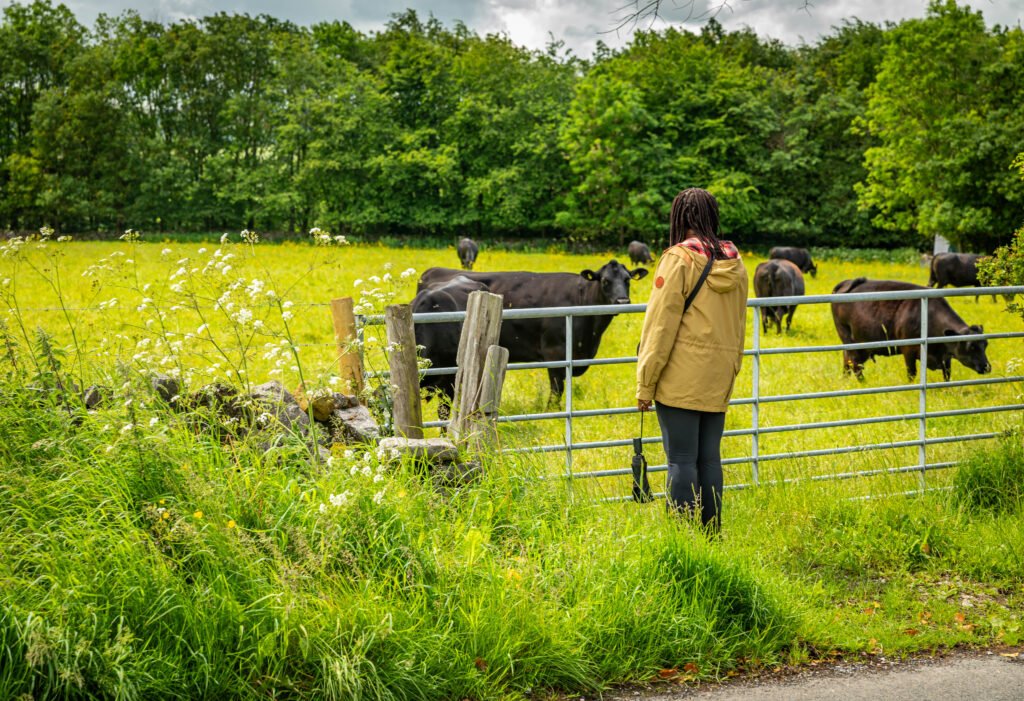
It sounds simple because it is. But the scenery makes it feel like something more. Every direction offered a new composition of green hills, grazing livestock, and pale stone. Some of our most memorable moments from the whole trip were the quiet ones — the half-hour walk before dinner, the morning route that became a daily ritual.
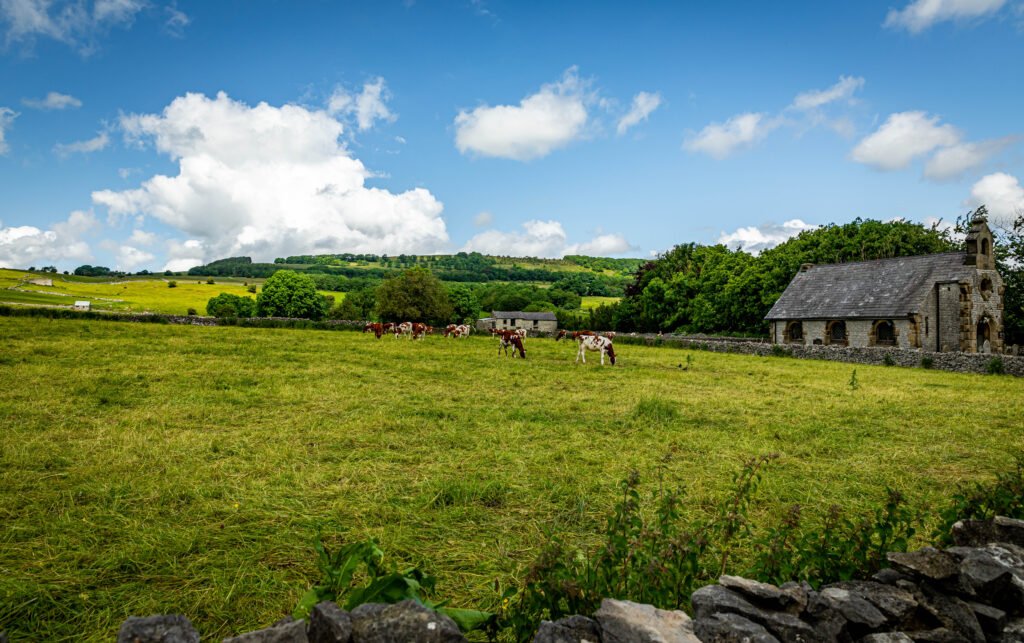
For slow travel, the Peak District rewards exactly this approach. You don’t need an agenda.
Monsal Dale and the Viaduct
That said, Monsal Dale is worth making the short drive for. The Monsal Head Viaduct is genuinely one of the most striking viewpoints in England — the kind of landscape that makes you understand why people have been coming here for generations.
We walked down into the valley and through Headstone Tunnel, part of the old Midland Railway line that now serves as a walking and cycling route. It wasn’t crowded during our visit — possibly the changeable June weather kept some visitors away — which meant we could take our time without negotiating for space.
For anyone carrying a camera, this area is exceptional. The viaduct and the valley below it became some of my favourite filming locations of the entire trip. The light in the late afternoon, when it finally decided to cooperate, was worth the wait.
Chatsworth House and Gardens
Chatsworth is one of those places that has appeared in enough films and television productions that you’d likely recognise it even if you’ve never heard the name. It’s one of England’s grandest stately homes, and it earns that reputation without feeling stuffy about it.
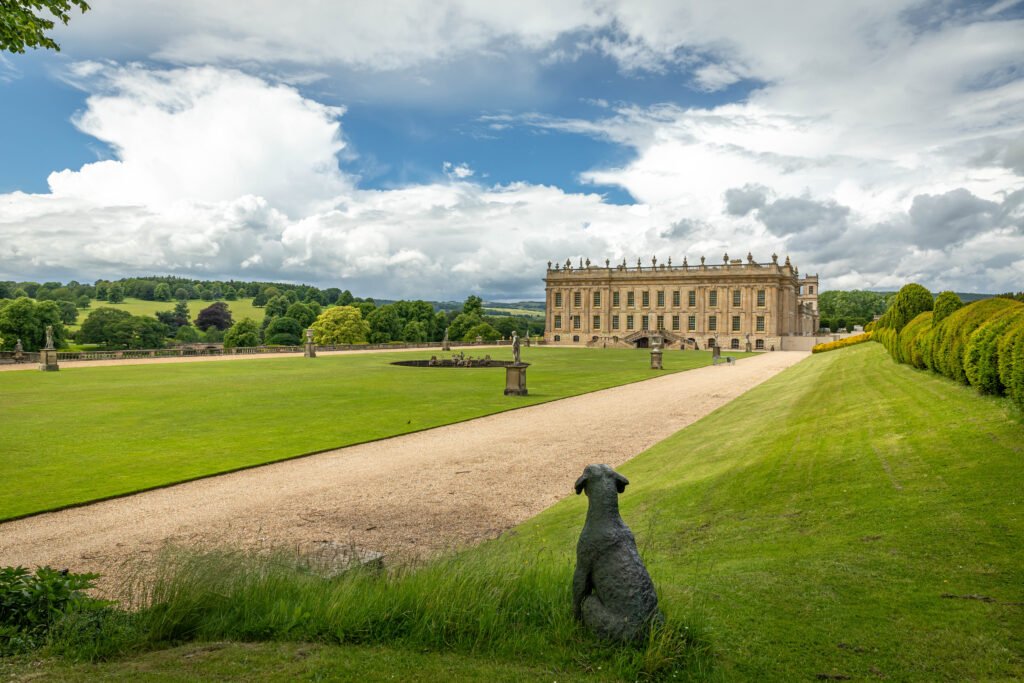
We spent around three hours exploring both the house and the gardens. The interiors are immaculate — elegantly preserved rather than frozen in aspic — and the gardens are expansive in a way that takes you by surprise. What we didn’t expect was how approachable the whole place felt. Despite the scale and the history, it doesn’t hold you at arm’s length.
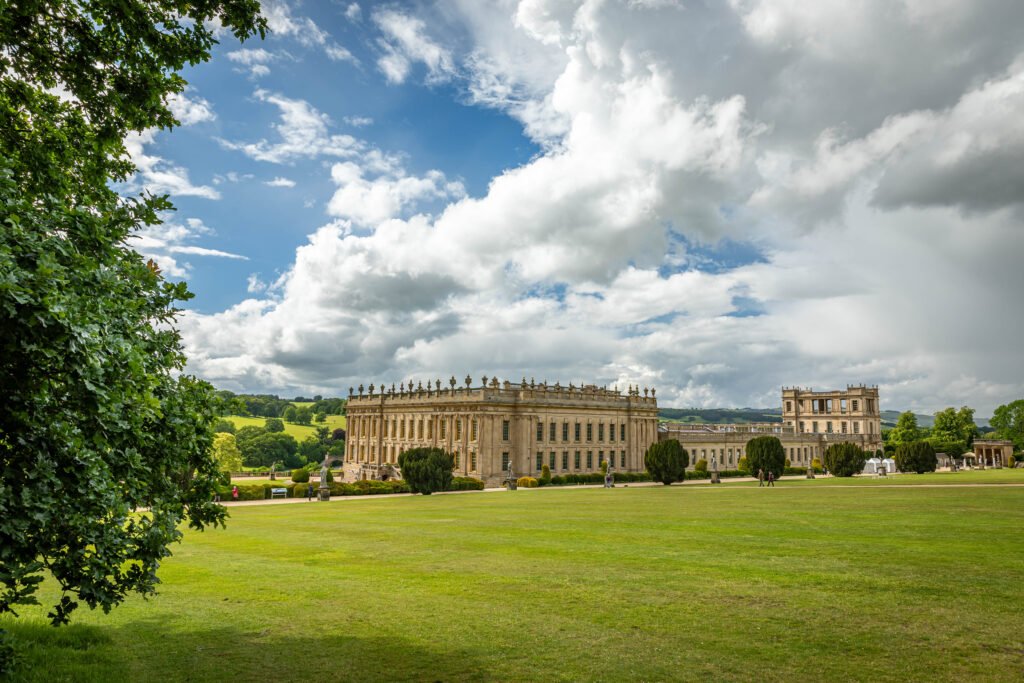
Admission is on the pricier side for a day out, but we thought it was worth every penny. It’s the kind of place that deserves its reputation, which isn’t always true.
Driving in the Peak District
I’ll be honest — getting back behind the wheel on the left side of the road after decades of driving in the US was mildly nerve-wracking for the first hour or two. After that it came back fairly naturally. What you can’t fully prepare for are the lanes.
Some Peak District roads are bordered on both sides by stone walls or dense hedgerows, leaving very little margin for error when another car appears around a bend. The approach that worked for us: slow down, stay calm, and don’t let impatient locals push you faster than you’re comfortable going. A rental car is still the right call for villages like Little Longstone — public transport options are limited — but go in knowing the roads are narrow.
Where We Ate
Most of our meals were cooked at the cottage — a practical rhythm that suits our slow travel style and keeps costs reasonable. But we did make one worthwhile stop in the nearby market town of Bakewell.
Catch 32 in Bakewell served up a Chicken and Mushroom Pie with chips that was exactly the kind of simple, honest meal you want in this part of England. Comfortable, well-made, no pretension. Good value.
One thing we didn’t manage, and which I’ll consider unfinished business: the famous Bakewell Pudding and Bakewell Tart. We simply ran out of time. They’re on the list for next time.
Marge’s Moment: The Countryside Walks
The walks are mine. Not the viaduct, not Chatsworth — though both were wonderful. The daily walks out of the village, with no particular destination in mind, were what I’ll take home from this trip.
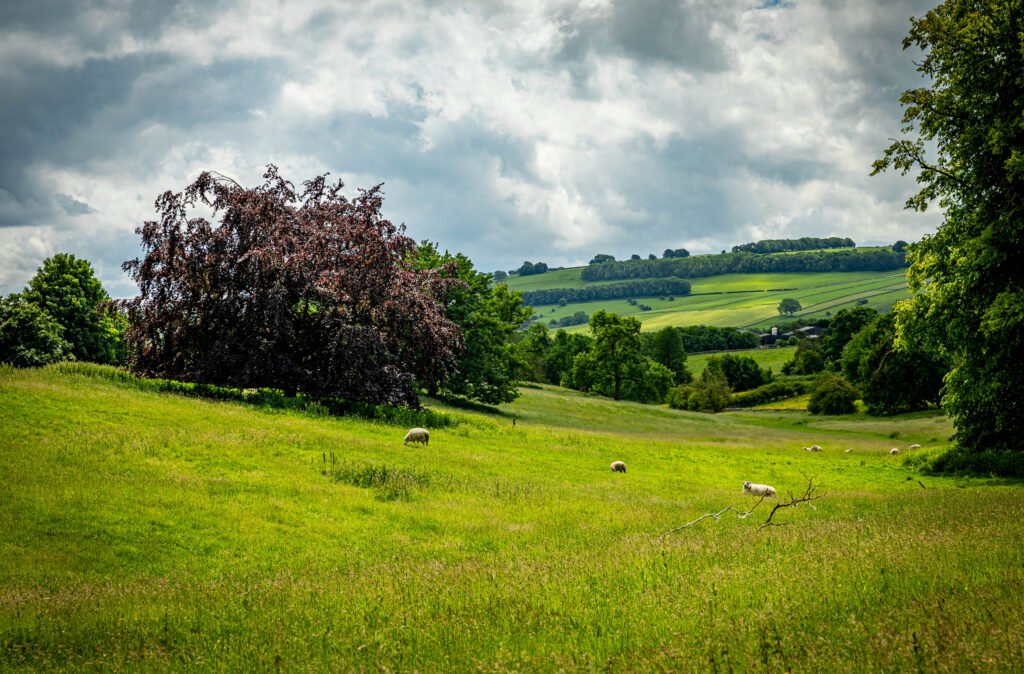
There’s something about an English landscape that you genuinely can’t photograph well enough to convey. The green is too green. The light changes too fast. You just have to be in it. We’d walk in the morning before breakfast, sometimes after dinner too, and it never felt repetitive. If you’re staying in Little Longstone and wondering whether to bother with a proper itinerary — don’t. Just walk.
— Marge
Practical Tips for Peak District Slow Travel
- Getting there: The Peak District is easily accessible by rental car from Birmingham (roughly 1.5–2 hours) or Manchester (around 1 hour). A car is essentially essential for villages like Little Longstone — public transport is very limited.
- Accommodation: Little Longstone Airbnbs are priced around $140–$180/night depending on size and season. Book well ahead for summer.
- Weather: June gave us sunshine, heavy rain, and everything in between — sometimes on the same afternoon. Pack layers, a waterproof jacket, and don’t count on a forecast being accurate for more than an hour.
- Connectivity: The UK has good 4G/5G coverage in most areas, including the Peak District. If you’re travelling internationally and want data sorted before you arrive, an Airalo eSIM is the easiest option — activates before you land and covers the UK well.
- VPN: If you’re working remotely or want secure browsing on public Wi-Fi, we use NordVPN — useful habit wherever we travel.
- Cash vs. card: The UK is very card-friendly. Contactless is accepted almost everywhere. Still worth having some cash for smaller village pubs or market stalls.
- Groceries: ALDI in Bakewell is the closest supermarket to Little Longstone — about ten minutes by car. Stock up on arrival.
- Chatsworth House: Allow at least 2.5–3 hours for both the house and the gardens. Book tickets in advance online — queues can be long in summer.
- Dining in Bakewell: Catch 32 is a solid option for a casual lunch or early dinner. The Bakewell Pudding is a local institution — don’t make our mistake and leave without trying it.
Final Thoughts
I’ve been back in England several times over the years, but always in cities. This was something different. The Peak District reminded me that there’s a version of my home country I never really knew — and that slow travel is exactly the right pace for discovering it.
If I’d driven through on a day trip, I’d have seen the viaduct and ticked a box. Spending a week here — walking the same lanes repeatedly, watching the weather roll in from the west, getting the measure of a single small village — was a different thing entirely. That’s the point of slowing down. It’s a lesson we keep relearning — we wrote about it in depth in 10 things a year of slow travel taught us.
We’ll be back. We have Bakewell Pudding to finish.
🎬 Watch the Full Video
We covered the Peak District as part of the same trip back to England — watch the full story on our YouTube channel:
▶️ Returning to England After 40 Years to Find Out Who Was Still There
— Mike & Marge | The Passport Pillow
Slow travel for curious souls.