This Chiang Mai travel guide is built on four nights in the city over New Year — not a highlights reel, but how it actually went. We flew AirAsia from Bangkok to Chiang Mai for $215 for two, return, during holiday season — which tells you something useful about the city before you’ve even landed. Chiang Mai is not a budget afterthought. It’s a deliberate choice, and the people who make it tend to know exactly why they’re there.
We arrived in the last days of December, which turned out to be very good timing. The city was dressed for celebration — the Countdown 2025 festival, the Flower Festival, New Year’s energy in the streets — and four nights that might have felt short in quieter circumstances felt genuinely full. Chiang Mai rewards the traveler who wants culture, walkability, and the kind of Northern Thailand experience that Bangkok, for all its energy, can’t provide.
Here’s how our four nights went.
Where We Stayed: InterContinental Chiang Mai The Mae Ping
We booked the InterContinental Chiang Mai The Mae Ping on IHG One Rewards points, which made the stay feel even better value than it already was.
The hotel is centrally located and genuinely nice — well-appointed rooms, a property that carries itself with quiet confidence, and staff who set the tone from the moment you arrive. The doormen and the greeter at the entrance were warm and attentive in a way that sticks in the memory — the kind of welcome that makes a hotel feel like a place rather than just accommodation. With only four nights we didn’t make full use of the grounds, but the hotel served as an excellent base for everything we wanted to do.
For IHG members, this is a solid points redemption in a city where the InterContinental brand fits the surroundings well.
Chiang Mai Travel Guide: What We Did in 4 Days
The Old City & Tha Phae Gate
Chiang Mai’s Old City is one of the more pleasant urban walks in Northern Thailand — a roughly square kilometre of temples, retail shops, café courtyards, and the kind of streets that reward wandering without a fixed agenda. The moat that surrounds it gives the whole area a defined, navigable edge that makes it easy to move through without getting lost.
Tha Phae Gate is the Old City’s most recognisable landmark — the eastern entrance to the ancient walled city, wide and ornate and constantly busy with people. When we arrived, a woman was posing for photographs at the gate with a pigeon perched on her hand, the city moving around her as if this were entirely normal. It was a perfectly Chiang Mai moment.
What made the timing particularly good: the city was in the early stages of setting up for the Chiang Mai Countdown 2025 festival. A large stage, portable seating, production equipment going up across the surrounding area. We passed by the event itself a few nights later — different artists performing, a warm crowd, a good atmosphere. Nothing individually spectacular, but the collective energy of a city celebrating New Year on its own terms was worth being part of.
Wat Chai Mongkhon
Situated on Charoen Prathet Road by the Ping River, Wat Chai Mongkhon is one of Chiang Mai’s most atmospheric temples — historically significant, visually distinctive, and still very much a working community wat rather than a tourist set piece. The riverside setting gives it a quieter quality than the more visited temples in the Old City. Worth the short trip.
Kotchasarn Road
We walked Kotchasarn Road on one of our afternoons and it’s worth noting simply because it’s a genuinely lovely walk — tree-lined, calm, and a good counterpoint to the busier parts of the city. No specific agenda required. Just walk it.
Charming Chiang Mai Flowers Festival 2025
The Chiang Mai Flower Festival was one of the genuine surprises of the trip — an evening event with illuminated flower displays, food stalls, live music, and fireworks that drew a lively crowd without feeling overwhelming.
The food stalls were the highlight. We found a vendor selling fresh spring rolls and went back to that stall more than once — they were made to order, properly crispy, with a filling that had real flavour, and served with a chili sauce that elevated the whole thing. The kind of street food that costs almost nothing and tastes like the best thing you’ve eaten all week. If you’re at the festival, find the spring roll vendor and go back twice.
Joy Elephant Sanctuary
We booked the Joy Elephant Sanctuary through Viator, and it was the right call for both the logistics and the experience.
Joy distinguishes itself from many of the elephant experiences available in Chiang Mai through its strict no-riding, no-bathing, no-touching policy. The focus is entirely on observation — watching the elephants move through their environment naturally, learning their individual histories from the guides, and understanding what ethical elephant care actually looks like in practice. We learned the history of the elephants in their care, walked alongside them through the sanctuary grounds, and filmed Marge hand-feeding one of them — a quiet, unhurried moment that felt genuinely special rather than staged.
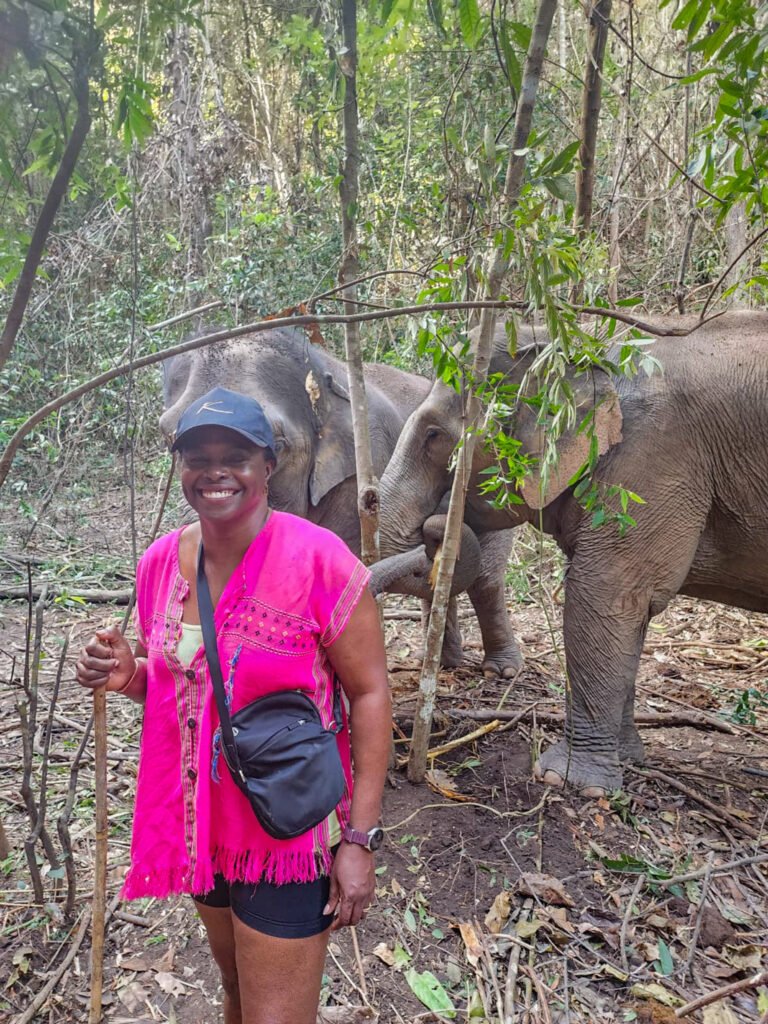
The sanctuary also has a small waterfall on site where you can swim, and lunch is included. For a half day, it’s a full experience — and the right kind. If you’re going to spend time with elephants in Thailand, spend it somewhere that prioritises the animals. Joy is that place.
Book early — the sanctuary limits group sizes and fills up, particularly during peak season.
Sticky Waterfalls (Bua Tong)
About 60 kilometres north of Chiang Mai, Sticky Waterfalls is exactly what it sounds like and simultaneously nothing like what you’d expect.
The limestone here is coated with calcium carbonate — a mineral deposit that creates a porous, high-grip surface across the rocks and the cascading water itself. The result is a waterfall you can climb barefoot, directly up the running water, using the grip of the stone rather than fighting against it. It shouldn’t work, and it absolutely does.
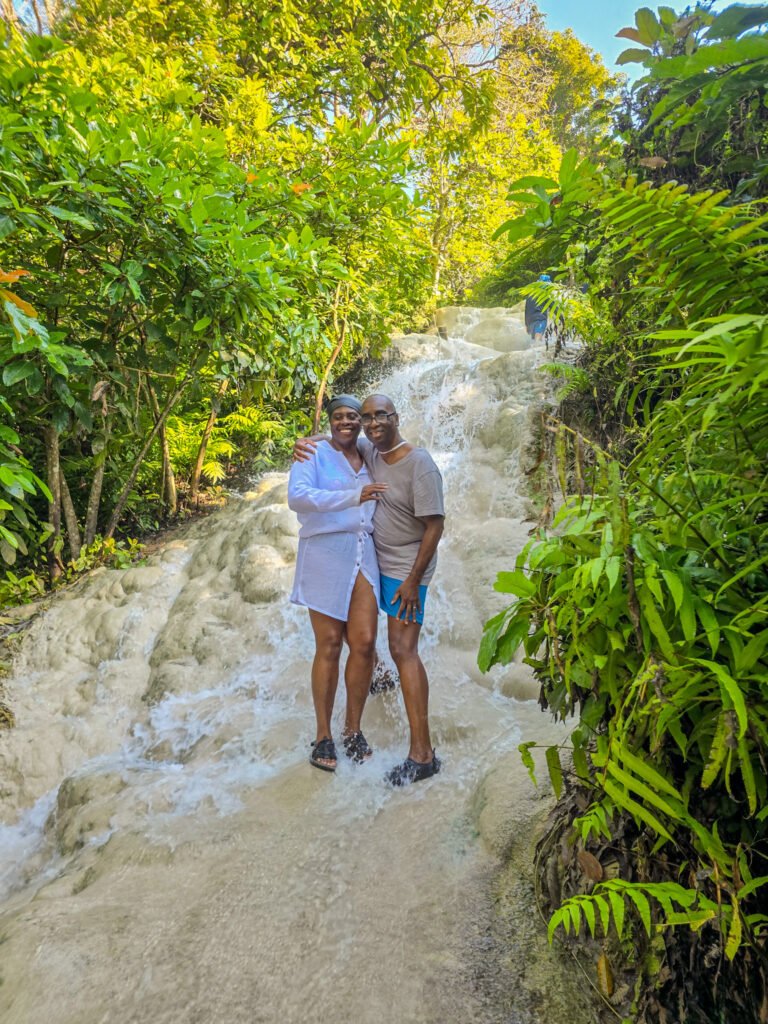
We climbed it. We filmed it. Mike slipped once — which tells you that “grippy” and “foolproof” are not the same thing — and climbed it again. It’s the kind of physical, energetic, genuinely fun activity that earns its place in any Chiang Mai itinerary purely on the basis of being unlike anything else you’ll do on the trip.
Also booked through Viator.
A Word on Gems Gallery
We visited Gems Gallery Chiang Mai — a sprawling jewellery megastore that is a Chiang Mai fixture for a reason. It’s large, well-curated, and staffed by hundreds of people across a highly organised layout. It’s also, in the most honest terms, primarily designed to sell you jewellery. Pleasant enough to walk through, and worth knowing what it is before you go in.
Where We Ate
Tha Phae Grill
A slightly upscale restaurant with two distinct experiences depending on where you sit. Downstairs is lively and busy — upstairs is considerably quieter and the better choice for a relaxed meal. We ate upstairs and were glad we did. Mike had the Chicken Massaman curry — rich, aromatic, exactly what a Massaman should be — and Marge had the pork fried rice. Both well-executed. A good dinner option in the heart of the city.
Bella Goose Café at the Hill
A charming breakfast café with a genuine vibe that’s harder to find than it sounds. The kind of place that feels like it was designed by someone who actually eats breakfast rather than someone who designed a café to look like they do. We had the BG Breakfast — eggs, bacon, sourdough — alongside two fruit smoothies, and took our time about it. The menu covers omelettes, sandwiches, and more. Go in the morning, sit down properly, and don’t rush it.
Yin Chu Chinese Restaurant
The food was average — we’ll say that plainly. But dinner at Yin Chu produced something the meal itself didn’t: a conversation with a fellow retired couple at the next table that turned into one of those unexpectedly good evenings that travel occasionally hands you. We talked for a long time. The food was fine. The company was the thing.
Burger King, Chiang Mai
Sometimes it’s 33 degrees, you’ve been walking for three hours, and what you need is air conditioning and something familiar. Burger King delivered on both counts. We include it not as a recommendation but as honest documentation — this is what slow travel actually looks like on some afternoons, and there’s no shame in it.
Getting Around
Grab is the primary answer — reliable, cheap, and covers most of what you’ll need in Chiang Mai. Tuk-tuks are widely available for shorter trips and add a layer of local atmosphere to the journey. Scooter rental exists for those comfortable with it, though we’d only suggest it for experienced riders given the traffic patterns and road conditions outside the city centre.
For day trips like Sticky Waterfalls and the Elephant Sanctuary, book through Viator — transport is included and the logistics are handled.
Practical Tips
- Best time to visit: November through February is the cool season and the most comfortable for outdoor activities. We visited over the Christmas and New Year period — busy, festive, and worth it, but book accommodation and experiences early.
- Avoid March–April: Burning season, when agricultural fires create significant air quality issues across Northern Thailand. Not the time to go.
- Cash: Carry it. Markets, street stalls, and smaller vendors are cash only. ATMs are widely available in the Old City.
- Book elephant sanctuaries early: Ethical sanctuaries like Joy have limited group sizes and fill up well in advance, particularly during peak season.
- Dress for temples: Shoulders and knees covered. A light layer or sarong in your bag saves time at every entrance.
- Connectivity: Pick up a local SIM on arrival or sort data before you land with an Airalo eSIM — grab one here and save 15% on your first eSIM
- Budget: $50–75 per day for two adults covers accommodation separately and includes food, transport, and most activities comfortably. Chiang Mai remains genuinely affordable.
Final Thought
Four nights in Chiang Mai was the right amount for a first visit — full without being rushed, and enough to understand why so many long-stay travellers end up here. The city has a walkability and a cultural richness that Bangkok doesn’t offer in the same way, and the access to experiences like the Elephant Sanctuary and Sticky Waterfalls within a short drive puts Northern Thailand’s best within easy reach.
That said, Chiang Mai during holiday season is a particular version of itself. We’d love to return outside the festive period — quieter, cooler, and with more time to see whether it’s the kind of place that could hold us for longer. The question is genuinely open.
For a first trip to Northern Thailand, it’s an excellent four nights. For our personal ranking, Hua Hin still edges it — the beach, the pace, the city vibe — but Chiang Mai earns its place on any Thailand itinerary without argument.
🎬 Watch the Full Video
We documented all four days in Chiang Mai — the temples, the Flower Festival, the elephants, and that waterfall — on our YouTube channel.
▶️ Chiang Mai in 4 Days | Temples, Festivals, Elephants & Sticky Waterfalls
If you’ve been to Chiang Mai, or you’re planning a visit, drop us a comment below — we’d love to hear where it took you.
— Mike & Marge | The Passport Pillow Slow travel for curious souls.