The full-time slow travel lessons you collect after a year on the road aren’t the ones you plan for. We just went. And a year in, with a lot of different cities, a handful of questionable Wi-Fi connections, and more pho than we can accurately count, we have a clearer picture of how this life actually works — as opposed to how we imagined it would.
Some of what we learned was practical. Some of it surprised us. A couple of things we’re still figuring out. This is the honest version — not the highlight reel.
Full-Time Slow Travel Lessons: The Honest Version
1. You Need Far Less Than You Think
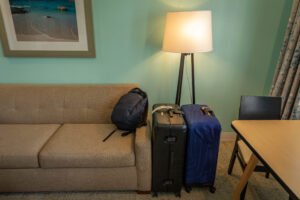
This one hits fast. After the first two or three months, you notice you’re rotating through the same core items constantly. The things you packed “just in case” stay buried at the bottom of the bag. Then you leave them behind on the next trip.
Packing for long-term travel is not about fitting everything in — it’s about ruthless editing. What earns space? What actually gets used? Marge has gotten very good at this. Mike is still a work in progress.
The mental shift is from options to function. You stop packing for every possible scenario and start packing for the life you actually live on the road.
2. Routine Matters More Than Freedom
Unlimited freedom sounds like the whole point — until you’ve had three structureless weeks and realised that without any shape to your days, even the most interesting city starts to feel like background noise.
The travelers who seem to thrive long-term — and we count ourselves in this now — aren’t the ones who throw out all structure. They’re the ones who build portable routines that travel with them.
For us, this looks different depending on where we’re staying. In hotels, we’re up earlier — partly for breakfast, partly because hotel life naturally creates a rhythm. Check-in, checkout, sightseeing in the hours you have. Airbnb stays are slower. We sleep later, move at our own pace, have more lazy mornings and longer evenings. In Vietnam, the heat and the city energy had us up early regardless.
The point isn’t a rigid schedule. It’s having enough structure that you don’t drift — that you still get the work done, still get outside, still feel like you’re living your day rather than surviving it.
3. Where You Stay Matters More Than Where You Go
In slow travel, your accommodation is your life — not just somewhere to sleep. You’re cooking in that kitchen. Working at that table. Starting every morning in that neighbourhood. A bad choice compounds daily in a way a rushed traveler would never notice.
We’ve had almost universally good experiences, which we’re grateful for. There was one Airbnb with peeling walls that wasn’t exactly a showroom — but the host was warm, the location worked, and the overall stay was fine. The walls didn’t matter by the end of the first week.
What we’ve learned to prioritise: location above almost everything else. Close to a grocery store. Decent restaurants within walking distance. For Marge — nail and hair care nearby, which sounds like a small thing until you’re six weeks into a stay and it isn’t. These practical anchors make a neighbourhood livable, not just visitable.
Read the reviews for what they don’t say as much as what they do. And always check the Wi-Fi speed before booking — see point 4.
4. Internet Quality Controls Your Life
We knew connectivity would matter. We didn’t fully appreciate how much until we were in a situation where it didn’t work.
If you create content, work remotely, or simply need to stay in contact with people at home — and we do all three — reliable internet stops being a convenience and becomes load-bearing. A slow connection means a delayed upload. A failed upload means a missed posting schedule. A missed posting schedule has a knock-on effect that takes a week to recover from.
Our backup is an Airalo eSIM — activated before we land, so we have a working data connection from the moment we arrive regardless of what the accommodation Wi-Fi is doing. It’s become non-negotiable. grab one here and save 15% on your first eSIM
5. You Become Extremely Efficient at Logistics
The first time you navigate a foreign airport with a language barrier, a new SIM card purchase, and an Uber that doesn’t speak English, it feels like a lot. Six months later, you do the same thing half-asleep and consider it a quiet morning.
Flights, ferries, visas, local transport, accommodation bookings, data plans — it becomes second nature. You build systems, and the systems reduce the decisions, and the decision fatigue that used to come with every new country mostly disappears.
We don’t think of this as a skill we set out to develop. It’s just what happens when you do something often enough. The friction drops. You stop dreading the travel days and start treating them as part of the rhythm.
6. Packing Is a Skill — and Most People Are Bad at It
Including us, at the start. The instinct is to pack for every possibility. The reality is that you can’t, and trying to means carrying weight that slows you down and stresses you out every time you move.
What you actually learn to pack for is the life you live: the camera gear you use every day, the three outfits you rotate, the comfort items that make a rental feel like yours. Everything else is a tax on your back.
Marge has genuinely turned this into a superpower. She knows what earns space and what doesn’t, and she makes those calls without sentimentality. The bag she packs now versus the bag she packed on our first trip — completely different animals.
The other thing nobody tells you: your bag is never finished. You’re always refining. Something gets cut, something gets added. The edit is ongoing.
7. You Value the Boring Days More Than the Highlight Moments
This took us a while to understand, and we think it’s the thing that most separates slow travel from a holiday.
The highlight moments — the iconic sites, the big experiences, the things you photograph — those are real. But they’re not what makes a place feel known to you. What does that is the accumulated texture of ordinary days.
In Da Nang, it was the morning walk along the beachside boardwalk before the heat arrived. Watching locals do their exercise routines on the sand — organized group workouts, older couples walking laps, kids on bikes. Then pho or a bánh mì from somewhere we’d clocked earlier in the week. Then one of our two regular coffee shops, where we’d eventually become familiar enough faces that ordering felt easy.
That’s when a place starts to feel real. Not when you tick off the famous temple, but when you have a coffee spot that’s yours.
8. Food Becomes About Consistency, Not Novelty
Early on, you chase the best restaurants, the most talked-about dishes, the things you’ve read about before arriving. And that’s fun — we still do it, especially in a new city.
But over time, the relationship with food changes. You start building go-to spots the same way you would at home: the place that’s reliable, the lunch option that works every time, the market you know by the third week. You stop needing every meal to be an event.
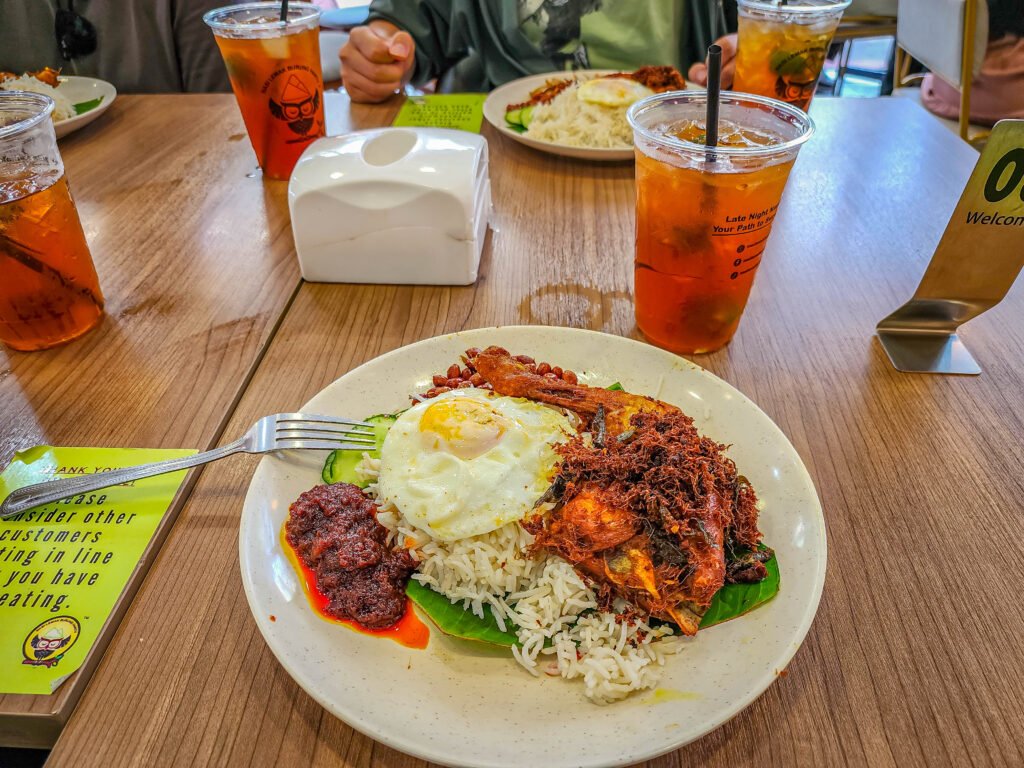
Marge cooking in the Airbnb is another version of this. When you’re somewhere for six weeks, home cooking isn’t a compromise — it’s part of how the place starts to feel like somewhere you actually live. She’s made meals in kitchens across three continents at this point, and some of the best food we’ve eaten on the road has been at our own table.
9. Not Every Destination Is Worth the Hype
We’re not going to name the place. But there’s been at least one destination on our list that arrived with a significant reputation, and the reality — the crowds, the prices, the gap between the Instagram version and the street-level version — didn’t match.
This isn’t cynicism. Every place has something real to offer, and part of the problem is always expectation. But slow travel recalibrates how you evaluate a destination. When you’re somewhere for weeks rather than days, the glossy version wears off faster, and you see a place more accurately.
What we’ve learned: trust your own read of a place over the consensus. Some destinations suit some people. Some don’t suit you. That’s not a failure of the place or of your trip — it’s just an honest outcome. Move on and find somewhere that clicks.
10. Relationships Require More Intentional Effort
Being mobile doesn’t automatically weaken your relationships — but it will, if you’re not deliberate about it. Friendships that run on proximity need a new operating system when the proximity disappears.
We decided before we left that staying connected wasn’t something we’d figure out as we went. It was something we planned for. Weekly video calls with our adult children at home are fixed in the calendar the same way a work meeting would be. Marge talks to the girls — our daughters — nearly every day. Not a long call every time, but enough that nobody feels like they’re out of the loop.
There are also the connections you build on the road — other travelers, locals you see regularly, neighbours in long-stay buildings. These tend to be intense and short. You know that going in, and you stop trying to make them permanent. A good month of knowing someone is worth exactly that: a good month.
The relationships that have surprised us most are the ones back home that have actually deepened. Regular calls, shared photos, the Skylight Frame that lets family upload pictures to our bedside table from wherever they are. Absence, it turns out, doesn’t always create distance. Sometimes it creates the conditions for better conversations.
One Year of Full-Time Slow Travel Lessons
None of these are complaints. If anything, they’re the things we wish someone had told us before we left — not to put us off, but to set us up with more accurate expectations.
The life works. The packing gets tighter, the logistics get easier, the routines find their shape. You learn what kind of traveler you actually are, as opposed to the traveler you imagined you’d be. And then you keep going.
If you’re thinking about making the jump — to slow travel, to long-term travel, to any version of this life — we’d say go. Just pack less than you think you need.
— Mike & Marge | The Passport Pillow
Slow travel for curious souls.