We flew to Cape Town from Malaysia — and Cape Town slow travel turned out to be one of the best decisions we’ve made.
This post contains affiliate links. See our [Affiliate Disclosure] for details.
Cape Town surprised us completely. Before arriving, most of what we’d heard centered around safety concerns. And while awareness matters — more on that later — what we actually found was a city of extraordinary landscapes, genuinely world-class food, and the kind of scale and drama that stops you mid-sentence and makes you point out the window. Fifteen days felt both long enough to settle in and not nearly enough to feel finished with the place.
Where We Stayed: De Waterkant
We based ourselves in De Waterkant, a neighbourhood that sits between the V&A Waterfront and the city bowl — walkable, well-located, and lively in exactly the right measure. Our Airbnb had a direct view of the mountains, which turned out to matter more than we’d anticipated when we booked it.
Mornings with coffee and that mountain vista became a daily ritual. In the evenings, watching the light change on the peaks as the day wound down was the kind of simple, repeatable pleasure that a good base provides. De Waterkant also put us close to several of the restaurants we returned to more than once — a practical bonus that revealed itself gradually over the first few days.
The Food — A City That Takes It Seriously
Cape Town is a serious food destination, and we say that having eaten well across Southeast Asia for months before arriving. The quality is high, the variety is genuine, and the value — particularly by the standards of what the food delivers — is remarkable.
Our first breakfast set the tone: beautifully presented, clearly made with care, and far more affordable than we expected. From that point on, meals became as much a part of the trip as the landscapes.
A few places worth naming specifically:
Kimchi BBQ in De Waterkant was one of the most memorable meals of the entire stay — bold Korean flavours, exactly the kind of neighbourhood find that makes staying in one area for longer rather than moving constantly worth it.
Bo-Vine Wine & Grill House in Camps Bay delivered a relaxed evening with a view of the Atlantic that earns its place in the memory. Good food, good wine, the ocean going dark in front of you.
Cattle Baron in De Waterkant is a reliable, well-executed steakhouse — the kind of place you go when you want a good meal without any surprises, and leave having had exactly that.
And then there was GOLD Restaurant.
GOLD Restaurant: An Evening That Deserves Its Own Section
We’d been told GOLD was worth going to. That description undersells it considerably.
GOLD is an immersive African dining experience built around a 14-dish tasting menu that takes you across the continent — dishes inspired by Uganda, Tunisia, Zanzibar, South Africa, and more, each one tied to a story. The evening begins with an optional djembe drumming session, and from there the food and the performance are intertwined throughout the night. Live dancing, Mali puppetry, marimba music, performers moving between tables — it’s celebratory and warm in a way that feels organic rather than staged.
What makes GOLD genuinely special is that the storytelling is personal. Many of the dishes and performances connect directly to the histories of the staff, who come from across Africa. You’re not watching a show — you’re being welcomed into something. By the end of the evening, the room feels different from how it felt at the start.
It is not a quiet dinner. It is not the place to go if you want to sit and talk undisturbed. It is absolutely worth going to, and we’d go back without hesitation.
Book in advance — GOLD fills up, and the drumming session at the start is worth arriving on time for.
Cape Town Slow Travel: Experiences Worth Planning Around
Table Mountain — and the Tablecloth
You cannot spend fifteen days in Cape Town and not be in a daily relationship with Table Mountain. It dominates the skyline from almost everywhere in the city, and its moods shift constantly with the weather.
Locals call the cloud formation that rolls over the flat summit the “tablecloth” — and watching it move is one of those things that sounds ordinary and turns out to be anything but. On still mornings the mountain is clear and sharp. By afternoon, the cloud comes in from the south and spills over the edge like something slow and deliberate. We watched it more times than we counted.
Practical note: The Table Mountain Aerial Cableway is the main way to the summit. Book tickets online in advance and check the weather forecast before you go — the cable car closes in high winds, which in Cape Town can happen quickly.
Cape of Good Hope
We booked a Viator day tour for the Cape of Good Hope, which was the right call — the peninsula is about 70 kilometers from the city centre, and having a guide handle the logistics left us free to simply be there.
Standing at the Cape itself is one of those experiences that resists easy description. The cliffs drop sharply to the ocean, the wind comes in hard and constant, and the sense of being at a genuinely significant edge of the world is not manufactured — it’s just there. The national park that surrounds it is beautiful in its own right, and the tour typically includes Boulders Beach, where African penguins go about their business with complete indifference to the people watching them from the boardwalks. It’s simple and unhurried and quietly wonderful.
Chapman’s Peak Drive
Do this slowly, with stops.
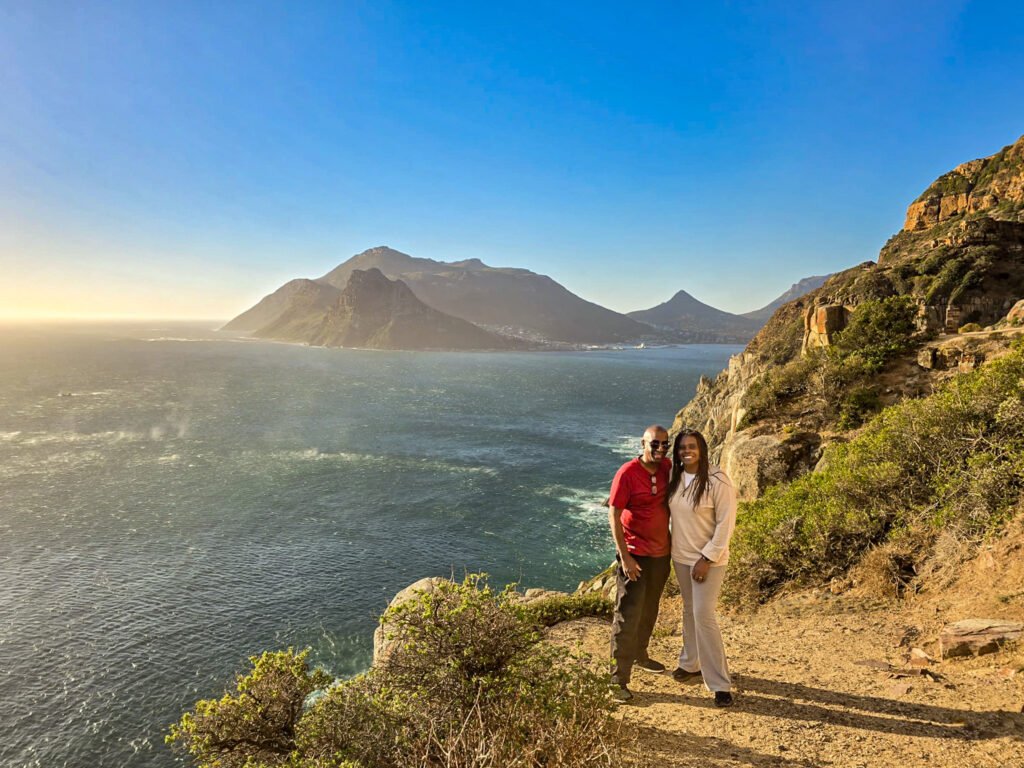
Chapman’s Peak Drive hugs the Atlantic coastline between Hout Bay and Noordhoek — ocean on one side, sheer cliff face on the other, the road cut into the rock in a way that shouldn’t quite work and absolutely does. It’s one of the most dramatic coastal drives either of us has experienced, and we’ve driven a few. The kind of road that makes you pull over not because you planned to, but because something caught your eye and stopping was the only reasonable response.
Kirstenbosch National Botanical Garden
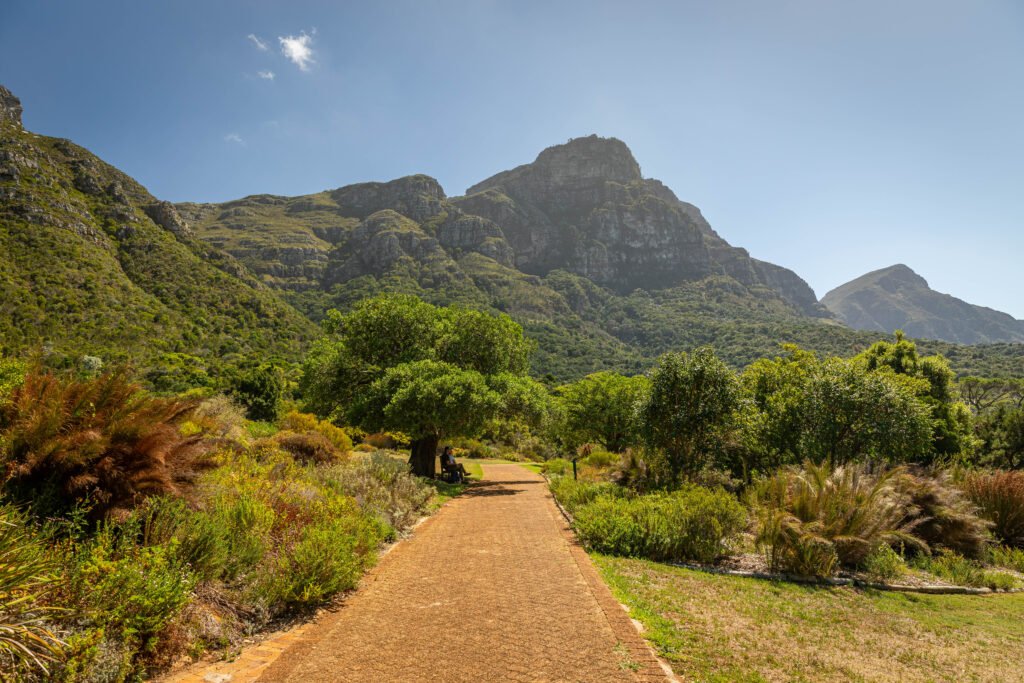
We underestimated Kirstenbosch, and we’d encourage you not to make the same mistake.
It is large — significantly larger than it looks on a map — and it unfolds gradually, with the Table Mountain mountains rising behind the upper gardens in a way that makes the whole place feel like it’s leaning into the landscape rather than sitting in front of it. Beautiful, genuinely peaceful, and the kind of place that rewards taking your time rather than trying to cover everything efficiently.
Allow at least half a day. Bring something to eat and find a spot to sit with it. The garden will do the rest.
V&A Waterfront
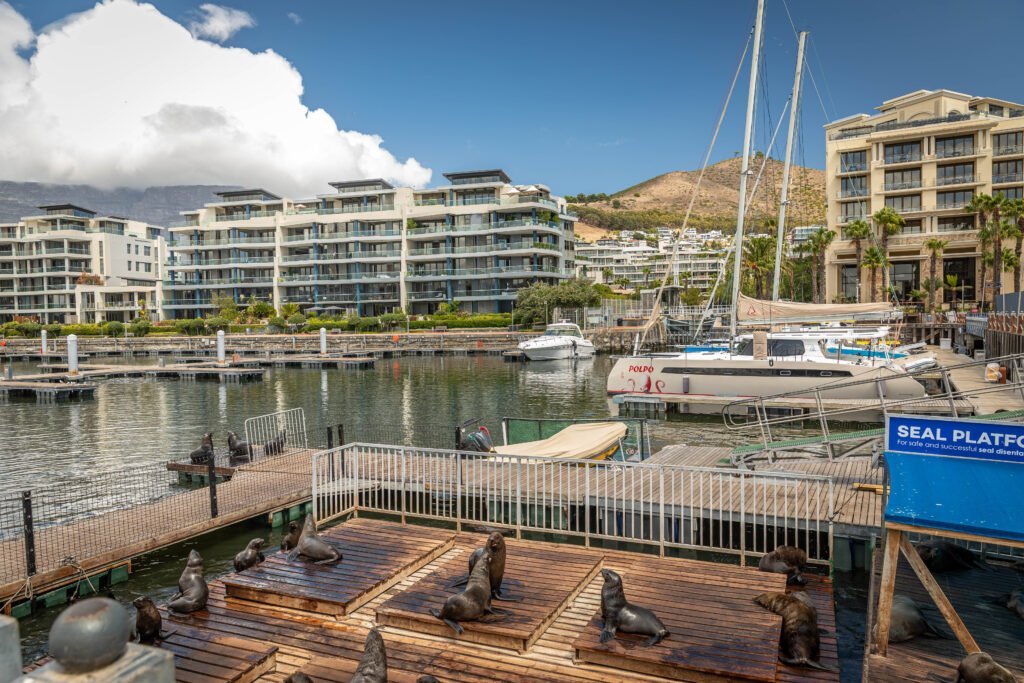
The V&A Waterfront is Cape Town’s working harbour turned into one of the most pleasant waterfronts in the world — boat tours, the Two Oceans Aquarium, restaurants, and the kind of easy, unplanned hours that a good waterfront always produces. We returned to it multiple times across fifteen days, each time without a specific agenda. It earns repeat visits.
Getting Around
The Cape Town Hop-On Hop-Off City Tour is genuinely useful for a first read of the city — it covers the main areas, lets you get off where something interests you, and takes the logistics out of a day’s exploration. If it’s your first time in Cape Town, it simplifies the early days considerably. An optional harbour cruise pairs well with it.
For everything else, Uber is reliable, affordable, and the sensible choice — particularly in the evenings. We used it consistently and without issues throughout the stay.
A Straight Word on Safety
Cape Town slow travel requires the same awareness as any major city — the crime rate is higher than many places we’ve visited, and we’re not going to pretend otherwise. But it’s also highly location-specific, and our fifteen days in De Waterkant told a different story from the one we’d been primed to expect.
What worked for us: staying in well-known, central neighbourhoods; walking during the day without excessive concern; being more intentional at night — using Uber rather than walking, keeping phones and valuables out of sight in busy areas. Standard smart travel practice, applied consistently.
Be aware, not paralysed. The city rewards the people who show up for it.
Practical Tips
- Best time to visit: Cape Town’s summer runs November through March — warm, dry, and the most reliable weather for outdoor activities. We visited in what is their autumn, and found it perfectly manageable with occasional wind.
- Wind: Cape Town is genuinely windy. Pack a layer that handles it, regardless of the season.
- Uber: Use it. Reliable, cheap, and the right choice for evenings in particular.
- Cape of Good Hope: Book a Viator day tour rather than trying to self-drive — the peninsula is a long way out and a guide adds real context. Check current tour options on Viator.
- GOLD Restaurant: Book well in advance. Arrive on time for the drumming session.
- Kirstenbosch: Give it a half day minimum. Take food.
- Connectivity: South Africa has solid mobile coverage in Cape Town. Sort data before you arrive with an Airalo eSIM — grab one here and save 15% on your first eSIM.
- Currency: The South African Rand. Card payments are widely accepted in Cape Town, but carry some cash for markets and smaller vendors.
Final Thought
Fifteen days of Cape Town slow travel left us quieter than we arrived, in the best possible sense. It’s a city that gives you a lot to look at and then gives you room to sit with it — the mountain, the ocean, the light in the late afternoon over De Waterkant, a meal at GOLD that we’re still talking about.
We came in uncertain. We left already thinking about when we’d go back.
🎬 Watch the Full Video
We documented the whole stay — the neighbourhoods, the drives, the food, and the parts Cape Town doesn’t always show you — on our YouTube channel. Watch it here:
▶️ We Spent 15 Days in Cape Town (Here’s the Truth)
If you’ve been to Cape Town, or you’re planning a trip, drop us a comment below — we’d love to hear where it took you.
— Mike & Marge | The Passport Pillow
Slow travel for curious souls.